 USD
USD











How does tirzepatide quiet the “food noise” of binge eating?
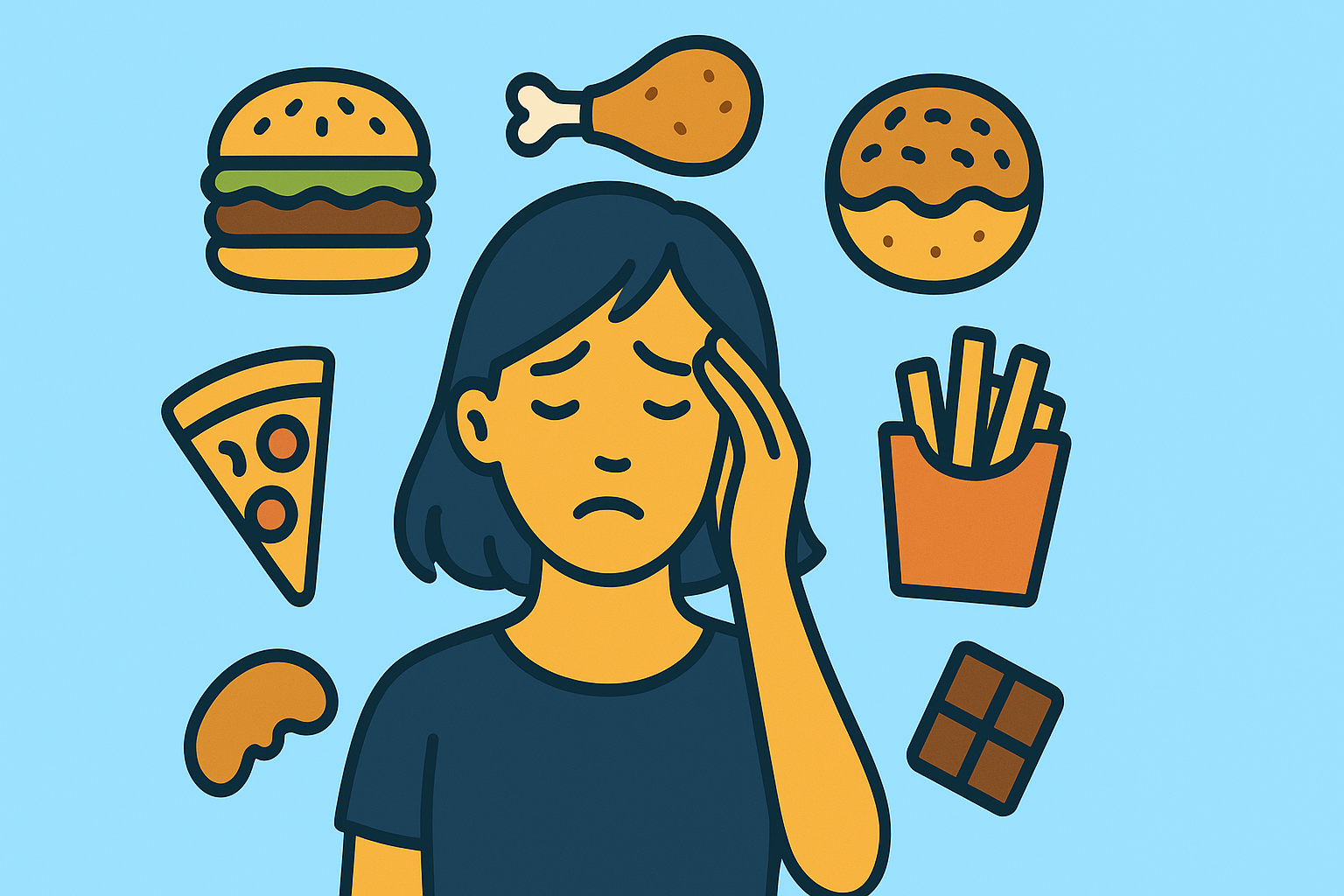
In recent years, GLP-1–type weight-loss injections (such as tirzepatide Tirzepatide) have not only helped patients lose weight. A key change often mentioned is that the “mental noise about food” has decreased—this is what people commonly call “food noise.”
For people who struggle with binge eating, if those constantly appearing food-related thoughts can be “turned down” like lowering the volume, their quality of life may change significantly.
This article will explain, in a way that general readers can understand:
-
What is “food noise”?
-
The relationship between binge eating disorder and the brain’s reward system
-
How GLP-1 medicines, especially tirzepatide, can temporarily “turn down” these voices
-
How much clinical evidence we currently have and what its limitations are
-
What people with binge-eating problems should carefully discuss with their doctor before using these medicines
1. What is “food noise”?
“Food noise” is not an official medical diagnosis, but a subjective feeling that patients often use to describe their experience:
Whether hungry or not, images of food, imagined tastes, and urges to order delivery keep appearing in the mind, making it very hard to focus on anything else.
Recent scientific articles have begun trying to build a conceptual model for “food noise.” They suggest it is related to heightened reactivity to food cues (for example, strong cravings triggered by seeing ads or smelling food), which is linked to increased activity in brain circuits responsible for reward and motivation.
Scientific American pointed out in a 2024 feature that, after using GLP-1 medicines, many patients report:
-
No longer thinking about what to eat all day long
-
Feeling less “pulled” toward high-calorie snacks and sweets
-
Finding it easier to follow their planned diet without having to “grit their teeth” through willpower
This subjective experience is what people commonly describe as “food noise becoming quieter.”
2. Binge eating disorder: not just “eating too much,” but a disorder of the brain and emotions
Binge eating disorder (Binge Eating Disorder, BED) is an eating disorder formally included in psychiatric diagnostic manuals. Its features include:
-
Repeated “loss-of-control” eating episodes over a short period: eating clearly more than most people would
-
Feeling unable to stop or control eating during a binge
-
Intense guilt, shame, and self-blame after binge episodes
-
Strong associations with weight control, emotional stress, and self-esteem problems
Studies show that binge eating disorder is closely related to the brain’s reward circuitry, impulse control, and emotional regulation. When the brain’s “reward signal” for high-calorie foods becomes overly sensitive, a person is more easily disturbed by “food noise” and finds it difficult to stop thinking about eating even when not hungry.
This is why many people with binge eating disorder keep eating even though they know it is bad for their health—they “cannot stop” not because they simply “lack willpower,” but because of complex neurobiological and psychological factors.
3. GLP-1 and tirzepatide: not only “getting thinner,” but also adjusting brain signals
1. What is GLP-1?
GLP-1 (glucagon-like peptide-1) is a gut hormone. Under normal conditions, when we eat, the small intestine secretes GLP-1 to send signals to the brain and pancreas:
-
To tell the brain “you are getting full”
-
To promote insulin secretion and help control blood sugar
-
To slow gastric emptying so that fullness lasts longer
GLP-1 receptor agonists are medicines that mimic this hormone and prolong or amplify these signals. Studies indicate that GLP-1 signals travel to the brain through the bloodstream and the vagus nerve, reducing hunger and cravings for high-calorie foods and influencing activity in reward-related brain regions.
2. How is tirzepatide different?
Tirzepatide acts on receptors for both GLP-1 and another gut hormone, GIP, so it is called a dual receptor agonist. The U.S. FDA has approved tirzepatide for weight management in adults with obesity or metabolic problems, but its current approved indication is still “weight management,” not psychiatric conditions such as binge eating disorder. (U.S. Food and Drug Administration)
However, because tirzepatide is more potent in appetite suppression and weight control than traditional GLP-1 medicines, it has sparked many studies on its potential impact on “food noise” and binge-eating behavior.
4. Scientific evidence: GLP-1 medicines and binge eating disorder
At present, most of the direct research on binge eating disorder looks at “GLP-1 medicines as a group,” not only tirzepatide. They also include liraglutide, semaglutide, and other GLP-1 drugs.
1. Small clinical trials and systematic reviews
-
A 2024 review published in Obesity Research & Clinical Practice reported that small trials using liraglutide to treat BED and bulimia patients showed reductions in binge frequency, body weight, and comorbid symptoms.
-
A 2025 systematic review focusing on GLP-1 agonists for BED combined multiple study results and found that these medicines show “potential” in reducing binge frequency and improving eating behavior. However, sample sizes were small and follow-up durations short, so larger randomized controlled trials are still needed.
2. Case reports and clinical observations
-
Case reports have described a long-term bulimia patient whose binge-eating behavior completely resolved within two weeks of starting liraglutide and remained in remission for several years.
-
There are also case reports describing marked improvements in severe binge eating and weight after semaglutide treatment.
Overall, these studies point in the same direction:
GLP-1 medicines appear to reduce patients’ sense of “loss of control” around food, decreasing binge frequency and body weight.
However, most existing studies are small and short in duration, and many participants have type 2 diabetes or obesity along with binge-eating problems, rather than isolated BED.
5. Tirzepatide and “food noise”: what do the latest brain studies say?
1. Neuroimaging research: turning down signals in the brain’s reward center
A 2025 study published in Nature Medicine observed changes in brain activity in a patient receiving deep brain stimulation for binge-eating/binge-type eating disorders while using tirzepatide.
-
The study found that during tirzepatide treatment, activity in the nucleus accumbens, a key region for reward and craving, decreased significantly. The patient also reported no longer being bombarded by food-related thoughts all day.
-
However, this inhibitory effect may not be permanent. The study noted that about five months later, brain signals and “food noise” gradually returned to previous levels.
In other words, tirzepatide seems able to temporarily lower the intensity of brain signals related to binge impulses, making it easier for patients to control their eating, but once the drug is stopped or the body adapts, the effect may weaken.
2. Ongoing clinical trials
There are already clinical trials specifically evaluating tirzepatide for BED, such as NCT06847399 (LIBERATE trial), which compares tirzepatide, placebo, and the approved medicine lisdexamfetamine for BED in terms of efficacy and safety.
But these trials are still ongoing, and full results and long-term safety data are not yet available.
Before that, using tirzepatide for binge eating disorder is still considered off-label use and should only be done after careful risk–benefit evaluation by a physician.
6. Is tirzepatide the “ultimate solution” for binge eating disorder?
Based on current evidence, we can say:
-
Tirzepatide and other GLP-1 medicines indeed have a chance to temporarily reduce “food noise” and binge impulses.
-
They do this by affecting hunger, gastric emptying, and activity in the brain’s reward centers, making patients less easily drawn to high-calorie foods.
-
-
However, it is not a “magic injection” that cures binge eating disorder.
-
Data show that the effect may weaken over time, and symptoms can recur after stopping the drug.
-
-
The best approach is to treat it as an “adjunct tool,” not a stand-alone therapy.
-
The core of binge eating disorder still lies in emotional regulation, self-worth, and coping with stress, so psychological therapies—especially CBT-E—remain first-line treatments in international guidelines.
-
7. Risks and controversies: people with a history of eating disorders need extra caution
Multiple professional organizations remind us that using GLP-1 medicines in people with a history of eating disorders must be done with great caution. The U.S. eating-disorder–related organization ANAD points out that although GLP-1 medicines can reduce binge eating and food cravings, their side effects—such as excessive weight loss and restricted intake—may worsen or trigger other eating disorders (like anorexic tendencies).
For people with binge eating disorder, this means:
-
If you already have depression, anxiety, or other mental health conditions, psychiatrists/mental-health specialists and endocrinologists should jointly evaluate before treatment.
-
During treatment, mood, eating patterns, and weight changes should be monitored regularly.
-
If obvious emotional deterioration or extreme restrictive eating behavior appears, you should promptly return to your doctor to evaluate whether to adjust or discontinue the medicine.
8. If you struggle with binge eating, how can you discuss tirzepatide with your doctor?
If you have obesity or type 2 diabetes and also struggle with binge eating, you can discuss the following with your treating physician (for consultation reference only, not medical advice):
-
Current diagnosis and treatment status
-
Have you been formally diagnosed with binge eating disorder?
-
Are you currently receiving psychological therapy (such as CBT-E), nutrition counseling, or other medication?
-
-
Tirzepatide’s indications and off-label use
-
According to local regulations, can and will your doctor prescribe tirzepatide in your situation?
-
Is the goal weight control, blood sugar control, or reducing binge frequency? What is the doctor’s treatment goal?
-
-
Expected benefits and possible limitations
-
What is your doctor’s view on how much “food noise” and binge impulses may improve?
-
How will treatment duration and follow-up be arranged? How will risks after stopping the medicine be managed?
-
-
Risk assessment and monitoring plan
-
Do you have a history of thyroid, pancreas, gallbladder, or psychiatric illness?
-
How will your doctor monitor emotional changes and eating patterns? How will they collaborate with psychologists or dietitians?
-
-
Integration with lifestyle and psychological treatment
-
How will diet changes, exercise, and stress management be implemented together?
-
Is it recommended to combine tirzepatide with formal binge-eating psychological treatment rather than relying solely on injections?
-
9. Lifestyle support: making “food noise quieter” without relying only on injections
Even if you are not using tirzepatide, there are several approaches that can help reduce “food noise”:
-
Regular meals and prioritizing protein: stabilizing blood sugar and fullness to reduce binge impulses triggered by low blood sugar.
-
Building non-food ways to regulate emotions: such as exercise, journaling, or mindfulness, instead of using food immediately as a way to numb pressure.
-
Identifying triggers: keeping track of what times, emotions, or situations most easily trigger binges (for example, working late, arguments, or being alone at home), then discussing coping strategies with your therapist.
-
Seeking professional help: binge eating disorder is a treatable mental illness, and you do not have to face it alone. Early help often prevents worsening of both weight and mental health.
Conclusion: tirzepatide is a “volume knob,” not the only answer
Putting current research together, we can cautiously say:
-
Tirzepatide and other GLP-1 medicines do have a chance to “temporarily turn down” food noise in the brains of people with binge eating disorder, so they are less pushed around by snacks and high-calorie food.
-
But this effect mostly seems to help control symptoms, rather than fundamentally resolving deeper issues of emotion, stress, and self-worth.
-
Truly breaking free from the binge cycle often requires a multi-pronged approach of medication + psychological therapy + nutrition and lifestyle changes.
Before considering tirzepatide, the most important step is to have a thorough discussion with a doctor who understands eating disorders about your full situation, rather than focusing only on “how fast you lose weight” or “how quickly food noise disappears.”
Disclaimer: This information is for reference only. Specific treatment choices should follow your doctor’s instructions and refer to the medicine’s prescribing information and the latest research.
GLP-1 Weight Management
GLP-1 medicines are FDA-approved for type 2 diabetes and weight management.
The leading options are tirzepatide (Eli Lilly) and semaglutide (Novo Nordisk).
Mediva Rx provides equally effective, more affordable generic versions.
-
Generic Mounjaro